Walk Magazine from the 1900 block up past 3900 this month and you'll pass storefronts at some stage of transformation: brown paper still taped to glass, a corner unit gutted down to studs, a sign that wasn't there in June. That much is normal for this street. What's not normal is what's happening behind the paper.
A designer who has dressed Beyoncé and Elton John just opened his second store in the country here, and he says he picked New Orleans specifically because people here are more willing to dress up than almost anywhere else he's tried. A Texas boot company sent its own native-son CEO to personally walk the block before signing a lease. A Los Angeles fashion label threw its grand opening with a jazz trio and a caterer pulled straight from the Quarter, not the kind of launch event you'd expect from a brand expanding into its fourth Southern city. None of these are footnotes. They're the pattern.
What's Actually Opening, Block by Block
Here's the current lineup, as of this September:
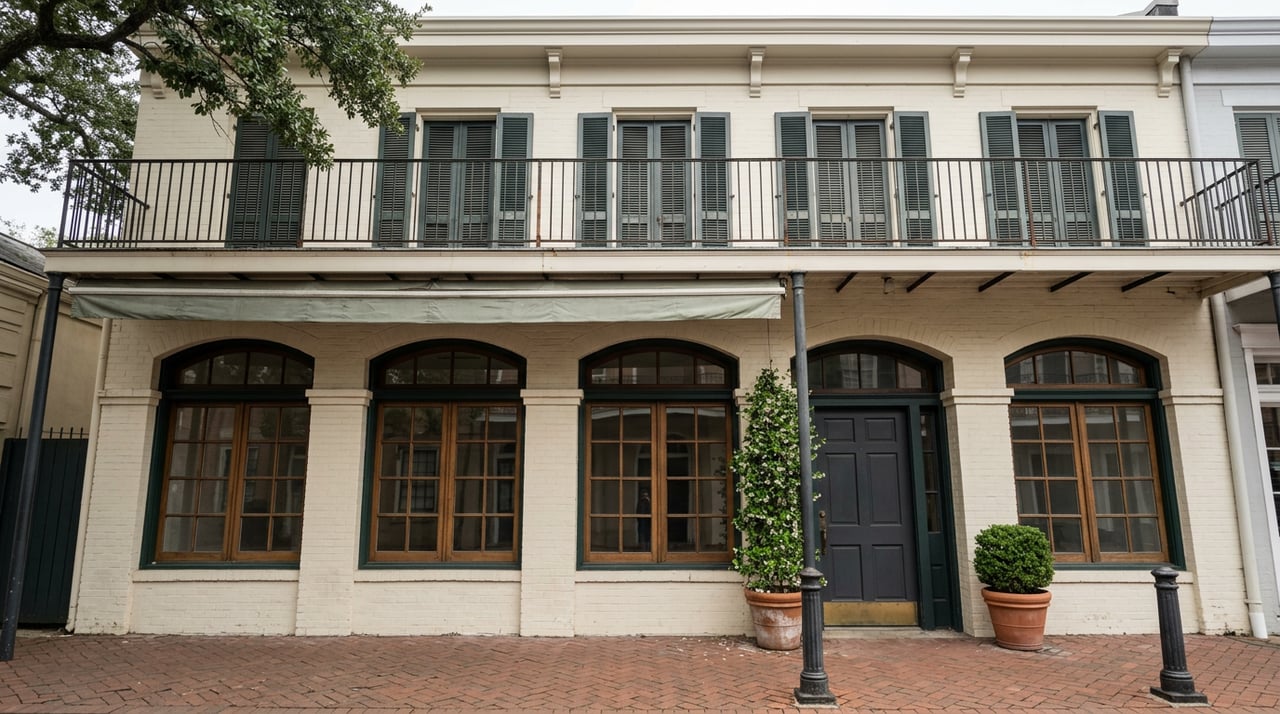
- Any Old Iron, the maximalist fashion label owned by designer Andrew Clancey, opened its first Louisiana shop on September 1 at 1900 Magazine St. in the Lower Garden District. The 1,250-square-foot space, in a building that has long paired ground-floor retail with residential units above, is only the brand's second permanent U.S. location after Nashville.
- Tecovas, the Austin-based bootmaker, has signed for 3901 Magazine St., a corner space in the Garden District that was long home to local boutique Pilot & Powell. Signage is up and a fall opening is expected.
- Reformation opened its Garden District storefront on a stretch of Magazine flanked by shotgun houses converted into restaurants and galleries. The brand marked the opening with a public housewarming catered by Bacchanal, featuring the Dr. Brice Miller Jazz Trio and wine from Really Really Nice Wines.
- Le Labo and Hill House Home round out the recent wave, both choosing Magazine for their first New Orleans footholds, according to reporting from Biz New Orleans.
That's five new names on one corridor inside a matter of months. Reformation, Le Labo, Tecovas and Hill House Home span apparel, beauty, footwear and home goods, four different categories all deciding independently that this particular six-mile strip of Uptown and the Lower Garden District was worth a first-in-market bet.
The Advisor Who Says No More Often Than Yes
Carly Ibach, Director of Retail Advisory Services at Capricorn Retail Advisors, has watched this wave arrive from the leasing side, and she's blunt about what she'll actually put on the street.
In Biz New Orleans, she said, "I'm only interested in tenants who elevate the street and complement the local businesses already there, not ones that could be dropped into any strip mall in the country." She added, "A corridor that's 100% national brands stops being the reason people wanted to be there to begin with."
That's not a marketing line. It's a filter she's applying deal by deal, and it explains something about why this particular wave of openings looks different from a typical retail rollout. According to Ibach, brands are underwriting New Orleans as a real market now, not a novelty, comparing sales productivity here against corridors like King Street in Charleston before they commit to a lease. The numbers have to work. But the numbers alone don't explain why a company would change its own playbook to get in.
None of Them Are Doing This Their Usual Way
Start with Any Old Iron. Clancey grew up working in his family's scrapyard in England, a business dating back to 1872, before building a brand known for theatrical, neon-lit retail spaces. He told a local outlet that New Orleans offers people more freedom to dress up than most cities he's tried, and that cultural fit is what pushed him toward a physical store here rather than staying online-only. About 75 percent of Any Old Iron's sales already happen in person, and he's said he wants each store to feel distinct rather than a copy of the last one. He's reportedly already eyeing a French Quarter expansion if the right space opens up.
Then there's Tecovas. The company has plenty of standard playbook moves, in-store boot debossing, personalized branding, the same formula it's used from Perkins Rowe in Baton Rouge to stores across the country. But CEO David Lafitte, who was born and raised in New Orleans, personally helped scout the 3901 Magazine location himself. "We've been patient about getting this right because New Orleans deserves more than just another retail store," Lafitte said in Hoodline. That's a company taking its time to get this location right, with the planned store inside a building that used to house a homegrown boutique.
Reformation's approach was smaller in scale but told the same story. A company with stores in Nashville, Charleston and Charlotte could have marked its New Orleans debut with a standard press event. Instead it hired a New Orleans caterer and a local jazz trio for the opening, and its executive told a local magazine the Garden District location sits inside an arts-focused block.
None of these are massive gestures. But taken together, they describe brands that are adjusting themselves to fit Magazine Street, rather than expecting the street to absorb them unchanged. That's the opposite of how most national retail expansion works. Chains standardize because standardizing is cheaper. Taken together, these openings suggest that adapting to Magazine Street can be worth the effort.
Six Miles Is Longer Than It Sounds
None of this means Magazine Street has flipped. The corridor Ibach and these companies are betting on runs a full six miles from Uptown down through the Lower Garden District, and five new storefronts, however notable, are still a small fraction of what lines those blocks. The street is still overwhelmingly local shops, restaurants and galleries, the same mix that defines the stretch where Reformation opened.
The one real loss in this wave is worth naming honestly. Pilot & Powell, the local boutique that previously occupied 3901 Magazine, is gone from that corner. Turnover on a commercial strip this active is constant, storefronts change hands for all kinds of reasons that have nothing to do with any single new tenant, and Magazine has absorbed openings and closings for generations without losing its character. But it's true that this particular corner will look and feel different once Tecovas moves in, and residents who shopped there will notice.
What You'll Actually See This Fall
If you're walking Magazine over the next few months, here's what to watch for. Tecovas is still finishing buildout at 3901 Magazine with an opening expected sometime this fall, though an exact date hasn't been announced. Any Old Iron's storefront at 1900 Magazine is open now, with neon signage and a newly installed LED dance floor inside, so it's worth a look even if sequins aren't your usual pace. Reformation's Garden District doors are open on a block that still runs mostly local, restaurants and galleries on either side. And if Clancey does end up scouting French Quarter space, that will be a second data point on whether this pattern of adapting rather than replicating holds up outside Magazine Street entirely.
For now, the street is doing something that's harder to fake than a press release. These openings suggest that fitting into this corridor may take more than a standard rollout. That's worth noticing on your next walk down the block, whether or not you ever set foot in one of the new stores.
If you're curious how shifts like this one ripple into home values and buyer interest on the blocks around Magazine, Tricia King has spent nearly two decades reading these corridors block by block. Let's Connect.